How a pour is measured
Concrete is bought by volume and measured in three dimensions, two of which
are in feet and one of which is almost always in inches. A slab is 10 feet by
12 feet by 4 inches; a footing is a length, a width and a depth; a post hole is
a diameter and a depth. The boxes on these pages take whichever unit you say it
in — 4in, 0.33ft and 4 in a box labeled
inches all mean the same thickness — because that is how the measurement comes
off the tape and out of your mouth.
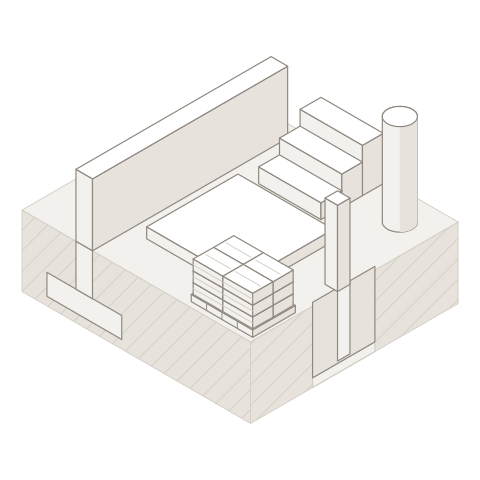
A job is usually several pours at once: the slab, the six post holes beside it and the three steps up to it. Each of those is a part, and the shopping list adds them. Working each one on its own page and adding the bags by hand is where a bag of waste allowance gets counted twice.
Bags or a truck, and the answer is not always arithmetic
Below about a cubic yard, bags win on price and there is no argument. Above about three, the truck wins. In between, the comparison depends on the short-load fee, the delivery charge and the minimum order, and these pages show both columns with the numbers in them rather than announcing a winner.
There is one place the arithmetic is overruled on purpose. Under the supplier's minimum order, a truck's price per yard looks cheap because you are being quoted for yards you will not get. The pages treat the minimum as a floor: below it the answer is bags, whatever the division says.
Bag yields are the hinge of every bag number on these pages, and they are not the same between brands or between sizes. An 80 pound bag of standard mix yields about 0.60 cubic feet; the same weight of fast-setting mix yields less. Both are on the page as editable constants with the bag's own data sheet behind them, so a brand you can actually buy locally is a number you can change rather than a result you have to distrust.
What else the list carries
A slab is not only concrete. The compacted gravel under it, the welded wire or the rebar in it, the form tubes a column is poured into and the water the mix needs are all on the shopping list, each with its own tick, because a list that only names the concrete sends you back to the store.
Two of those rows are a choice rather than an addition. The gravel base can be bought in bags or delivered loose by the short ton, and for a slab of any size the loose delivery is the cheaper row by a wide margin — on the slab page's opening project, ticking it takes about a third off the whole list. Mesh and rebar are the same kind of pair. Ticking both halves of a pair buys the same job twice.
Where the numbers come from
Slab thickness and minimum compressive strength by use come from ACI 332-20, the residential concrete code, read in the text rather than from another calculator. Mesh and bar spacing come from the Wire Reinforcement Institute. The gravel base depth under a slab follows the same subgrade logic the gravel pages use, and its density is the gravel cluster's own constant rather than a second copy of it.
Every one of those numbers is a row under Assumptions on the page that uses it, labeled measured, convention or estimate, with a one-line note saying where it came from. The ones labeled convention are conventions — they are what the trade does, not what a document says, and the label is there so you can tell the difference at a glance.
What these pages do not do
They do not schedule reinforcement. The temptation is obvious — the pages already know the footing's width and depth — but the IRC sets footing reinforcement by seismic design category, not by footing size, so the only way to produce a bar schedule from the measurements on these pages would be to invent a convention and present it as a code requirement. That is precisely what the data rules here forbid, so the pages count the bar you tell them about and stop.
They do not design a mix. Water-cement ratio, air entrainment, aggregate size and admixtures belong on a supplier's ticket, and a page that guessed at them would be guessing about durability.
They do not write a curing or a strip schedule, and they do not account for pumping, wheelbarrow waste on a long run, or the yard you lose to a sloppy subgrade. The waste box is one allowance added once, and it is yours to set.
And they do not replace a structural drawing. A slab on grade for a shed and a slab carrying a wall are the same arithmetic and not the same decision.