How far a deck beam spans, and how many posts
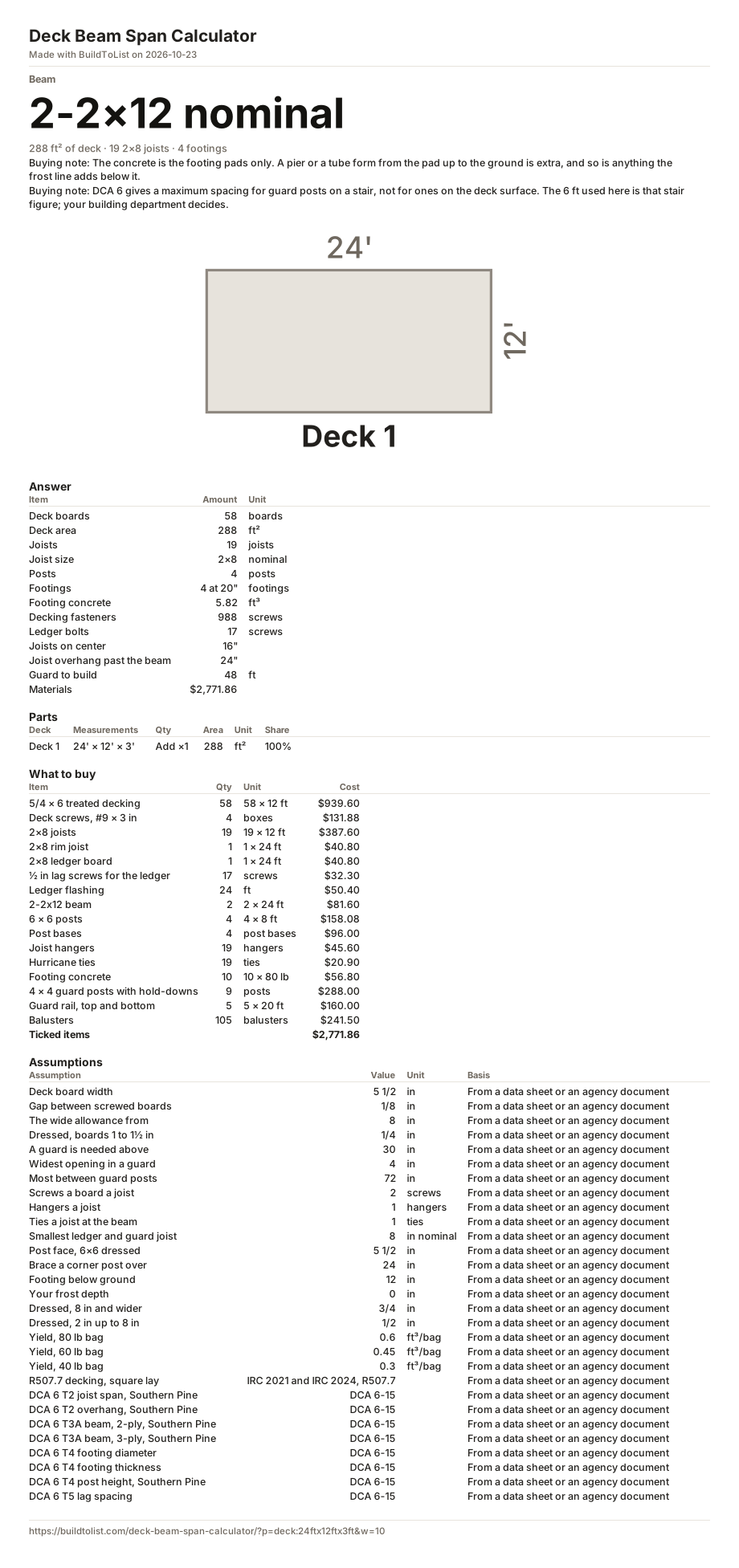
A 24 foot deck carrying joists that span 10 feet takes 4 posts and a doubled 2×12. DCA 6-15 Table 3A gives a 2-2×12 in Southern Pine 9' 2" between posts at this joist span; the beam is split into three 8 foot runs, which fits. Three posts would mean 12 foot spans and nothing in the table reaches that doubled, so the page adds the fourth.
The page looks for the fewest posts that any beam in the table will carry, because fewest posts is fewest holes to dig. It tries two plies before three at each count, so you get the lighter beam where the lighter beam works.
Reading the column, not interpolating it
Table 3A's columns are joist spans "less than or equal to" 6, 8, 10, 12, 14, 16 and 18 feet. A joist spanning 11' 2" is read in the 12 foot column, not between the 10 and the 12. Rounding up to the next column is part of reading the guide, and the working on this page prints which column it used.
Species matters here too, but the guide groups them differently than it does for joists: Table 3A has two blocks, Southern Pine and everything else. In the second block the two-ply row is printed "3x6 or 2-2x6" — a solid 3× and a doubled 2× read the same line. A doubled 2×12 that spans 8' 4" in Southern Pine spans 6' 7" in the other group, so the same deck gains a post.
What comes with the beam
The beam span sets the footing. Table 4 reads beam span against joist span and gives a round footing diameter, a square size and a pad thickness; widen the post spacing and the footings grow. It also sets how tall a 6×6 post may stand, and some combinations of long beam and long joist are left blank — the guide does not permit a prescriptive post there at all, and this page says so rather than filling the blank in.
Joists must not frame in from opposite sides of the same beam, and a beam attached to the side of a post without notching is prohibited. Notch the post or use an approved post cap; a three-ply beam always takes a cap.