Deck railing: when it is required, and what it takes
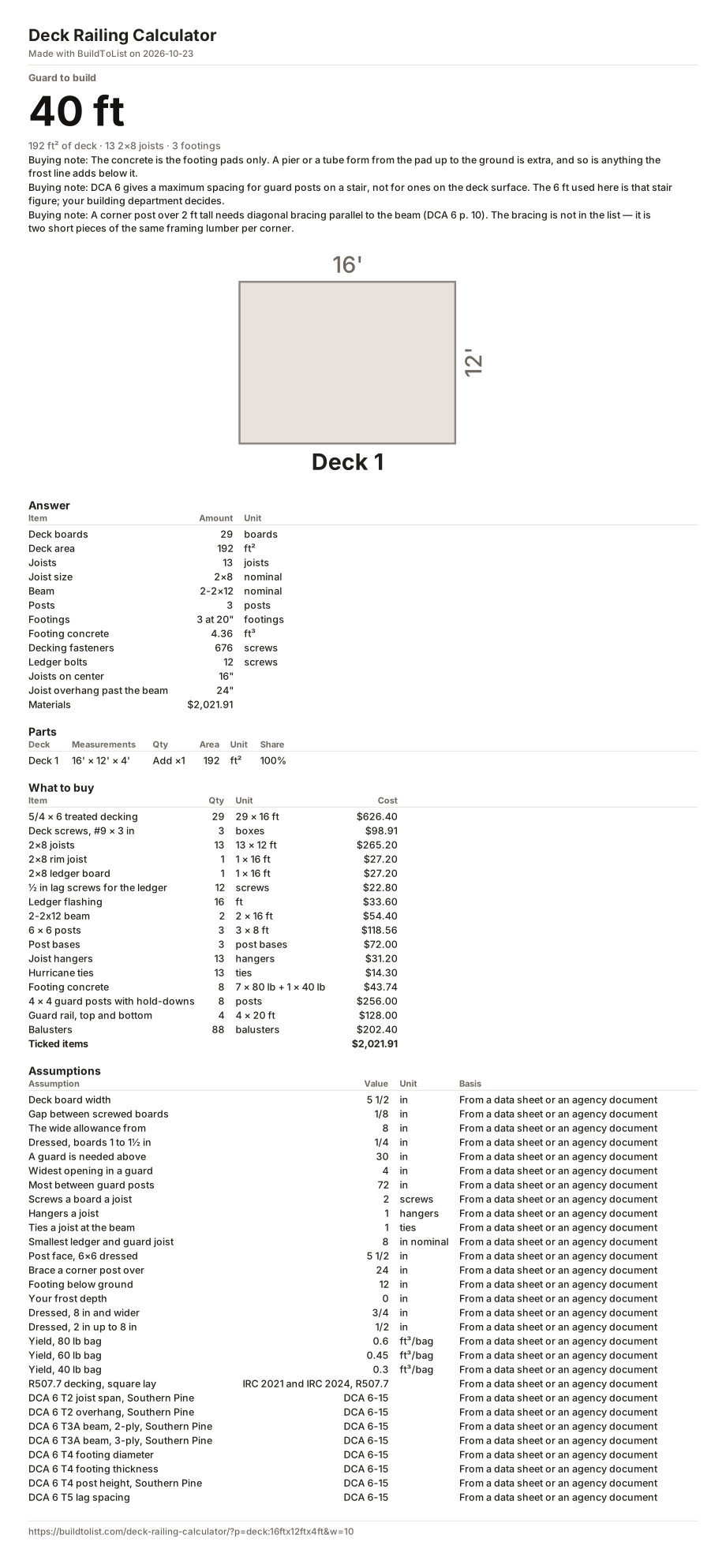
A deck more than 30 inches above the ground has to have a guard (IRC R312.1, and DCA 6-15 p. 19). A 16 by 12 foot deck 4 feet up has 40 feet of guard — the perimeter less the side against the house — and that is 8 posts, 4 rails of 20 feet for the top and bottom runs, and 88 balusters.
Balusters are counted so no opening lets a 4 inch sphere through. A 2×2 baluster is 1½ inches wide dressed, so each one plus its gap takes 5½ inches: 480 ÷ 5.5 is 87 openings and 88 balusters. The 4 inch sphere is the deck guard's rule and it is not the 4⅜ inch one you may have seen — that wider sphere is for the triangular opening at the open side of a stair tread, and using it on a deck would mean fewer balusters than the code allows.
Guard posts are a connection, not a post
The guide asks for a 4×4 at the smallest with an adjusted bending design value of at least 1,100 psi, bolted to a joist or rim joist that is itself a 2×8 at the smallest — which is why a deck with a guard never gets 2×6 joists on this page. Each post needs a hold-down anchor rated to at least 1,800 pounds in tension for a guard up to 36 inches tall, installed the way its maker says. A guard post lag-screwed to the rim and nothing else is the commonest failure in deck collapse reports.
Posts running parallel to the joists bolt to the outside joist; posts running across them bolt to the rim. The two details are different, and the guide draws them separately.
Where the 6 foot post spacing comes from
DCA 6 gives a maximum spacing for guard posts on a stair, not for ones on the deck surface. The 6 feet used here is that stair figure applied to the deck, and the page says so beside the count rather than letting it pass as the clause. Your building department decides, and some ask for 4 feet.
Below 30 inches no guard is required, and none is counted: the guard rows leave the list until the height goes over. A low deck with children around is a fair reason to build one anyway — raise the height box to 31 inches to see what it would take, then build what you meant to build.