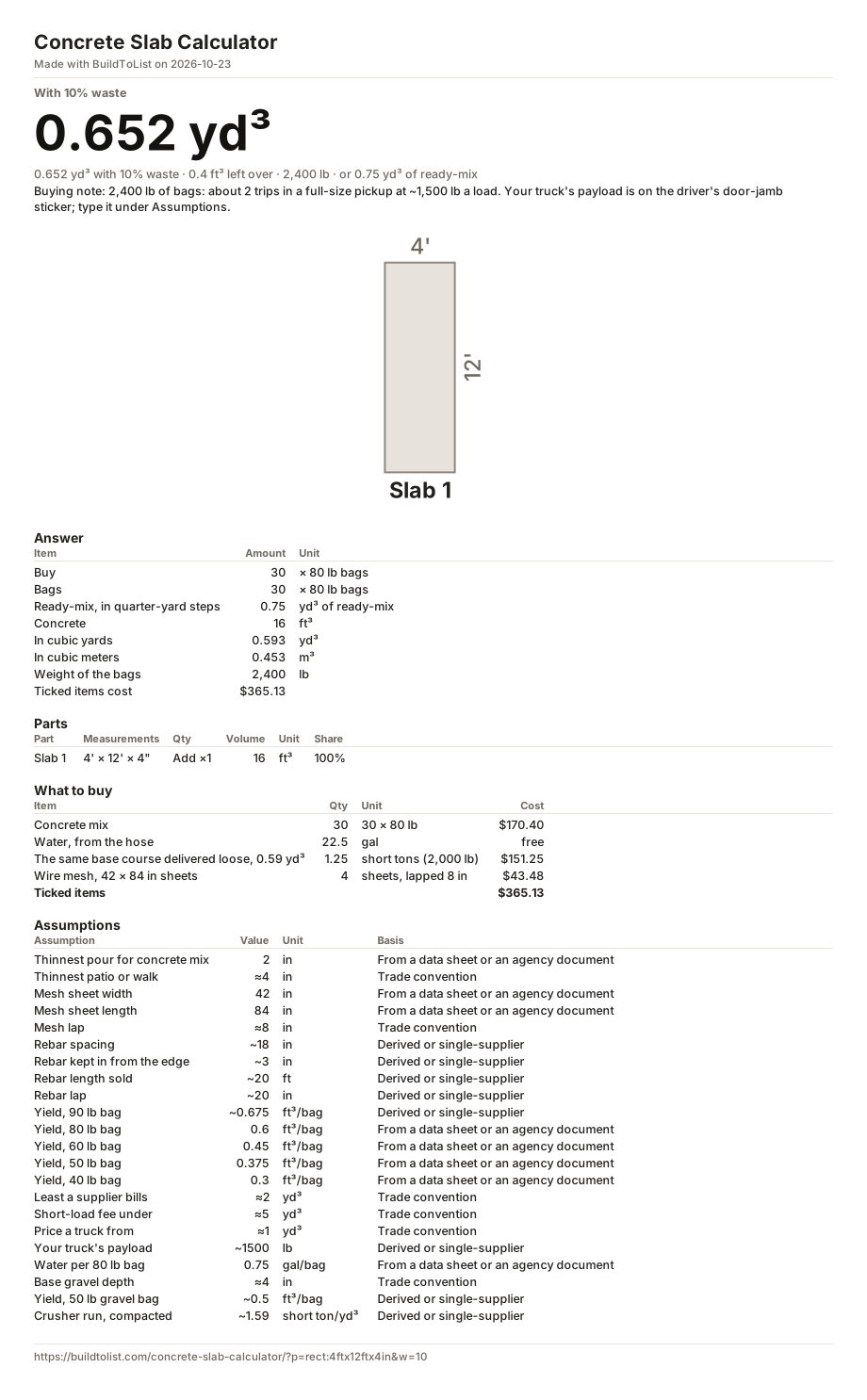
How much concrete a slab takes
A slab is its area times its thickness. The 12 by 16 ft slab this page opens with, poured 4 inches thick, is 12 × 16 × 4/12 = 64 cubic feet, which is 64 ÷ 27 = 2.37 cubic yards. Add the 10% waste in the box and it is 2.61, and because a yard comes off the truck in quarter-yard steps you order 2.75. In bags it is 118 of 80 lb — 9,440 lb, or seven trips in a half-ton pickup, which is the answer to whether this one is a bag job.
Thickness is a box, not a pair of radio buttons: type 4, 4 1/2, 5 or
4.5 and the yards follow. Every number above is also a box — the
waste, the bag yield, the gravel depth — and the result says which figure it
used and where it came from under Assumptions.
How thick, and for what
Thickness follows what the slab carries, and only one of the four figures below is a building code. Tell the page what the slab is for and it checks the thickness against that figure and says which document the figure is from.
| What the slab is | Thinnest | Where that comes from |
|---|---|---|
| Patio, walk or shed floor | 4" | Trade convention — no code sets a minimum |
| Driveway, cars and pickups | 4" | ACI 330, as the ASCC quick reference states it (4 to 4 1/2") |
| Driveway, trucks, RVs, dumpsters | 5" | Producer guidance and the heavier ASCC classes |
| Floor inside a building, on the ground | 3 1/2" | IRC 2021 R506.1 — adopted code where the IRC is in force |
Pick the floor and two code rows appear under the answer: R506.1 on the thickness, and R506.2.2 on the base course under it. They are the only rows on this page that quote a code, and they say "not checked" rather than "fine" wherever the clause turns on something the page cannot see — your soil, in the case of the base. For a patio or a drive there is no clause to quote, so the thickness advice stays beside the box as a note.
Thinner than 2 inches, concrete mix will not hold at all and the job wants a resurfacer or a topping mix instead. That one is about the material, not the use, so the page says it whatever the slab is for.
Yards, square feet and bags by thickness
| Thickness | Cubic feet per ft² | ft² a cubic yard covers | 80 lb bags per 100 ft² |
|---|---|---|---|
| 3 1/2" | 0.292 | 93 | 49 |
| 4" | 0.333 | 81 | 56 |
| 5" | 0.417 | 65 | 70 |
| 6" | 0.500 | 54 | 84 |
The bag column is before waste, at the 0.60 cubic feet an 80 lb bag makes. Add your waste figure and round the whole job up once — not each slab, and never to the nearest bag.
What goes under it
Under a slab on the ground go a base course and, usually, steel. The base is compacted gravel, 4 inches of it, which for the opening project means 192 ft² × 4 in = 64 cubic feet — the same 2.37 cubic yards of gravel as the slab takes in concrete, because the area and the depth are the same. In 50 lb bags at about half a cubic foot each that is 141 bags, which is the page telling you to buy this one loose.
So the list offers it both ways and ticks the loose one. Compacted, those 2.6 cubic yards weigh about 4¼ short tons, which a yard sells by the short ton and delivers on one trip; the two price boxes beside the row are the stone and the trip, both from the figures under Assumptions, both yours to type over. The bagged row sits right above it for the small patio that really is a trolley of bags — tick that one instead and the total follows. For another stone, or to order by the cubic yard instead, the gravel calculator takes this slab's outline through the link under the answer.
Where the IRC is in force, that 4 inches is R506.2.2 for a floor slab below grade, and the clause lets a well-drained gravel or sand soil go without. Outdoors it is not a code requirement at all — it is what keeps a patio from settling into a puddle.
Mesh and rebar are one choice, not two things to buy, so the mesh row is ticked and the rebar row is not. Untick the mesh and tick the rebar and the list swaps: sheets become bars, laid both ways at the spacing under Assumptions, kept the cover distance in from every edge. Either way the count is for this slab's own measurements, not a rule of thumb per square foot — getting that wrong is how a 100 ft² slab ends up quoted 63 sheets of mesh.
Bags or a truck
Past about a cubic yard, bags stop being the cheap answer and start being a long day. This slab is 2.6 yards: 118 bags to carry, open, and mix in batches, against one delivery. The page prices both from the figures in the boxes and puts the comparison under the buy list, with the short-load fee a supplier adds below their minimum load. Under a yard it goes the other way, and the comparison still shows, so the choice is visible rather than made for you.
Common questions
How many yards is a 12 by 16 slab?
2.37 cubic yards at 4 inches thick, 2.61 with 10% waste, ordered as 2.75. At 5 inches it is 2.96 before waste, and at 6 inches 3.56. Change the thickness box and the three lines under the answer change with it.
Is 4 inches enough for a driveway?
For cars and pickups on a prepared base, yes — that is the ACI 330 figure. For anything that arrives on six wheels, a skip, an RV or a delivery truck, the figure goes to 5 inches or more, and the page will say so when you tell it what the drive carries. How much steel goes in it is a separate question, and not one this page answers.
Does this slab need rebar?
This page counts steel; it does not design it. A patio or a shed floor is commonly poured with mesh and nothing else, a drive that carries weight with bars. What a slab with a building on it needs is an engineer's question, and your building department's answer wins over any calculator.
Is the waste added twice?
No. Waste is multiplied in exactly one place in this site, and the result shows the volume before and after it so you can see it happened once. Set the box to 0 and the before and after lines agree.
Can I pour part of this now and part later?
Then it is two slabs, and the honest way to count it is two parts: Add part, type the second one, and the breakdown gives you each on its own line with its share of the total. The drawing shows both to scale, which is the fastest way to spot a measurement typed into the wrong box.