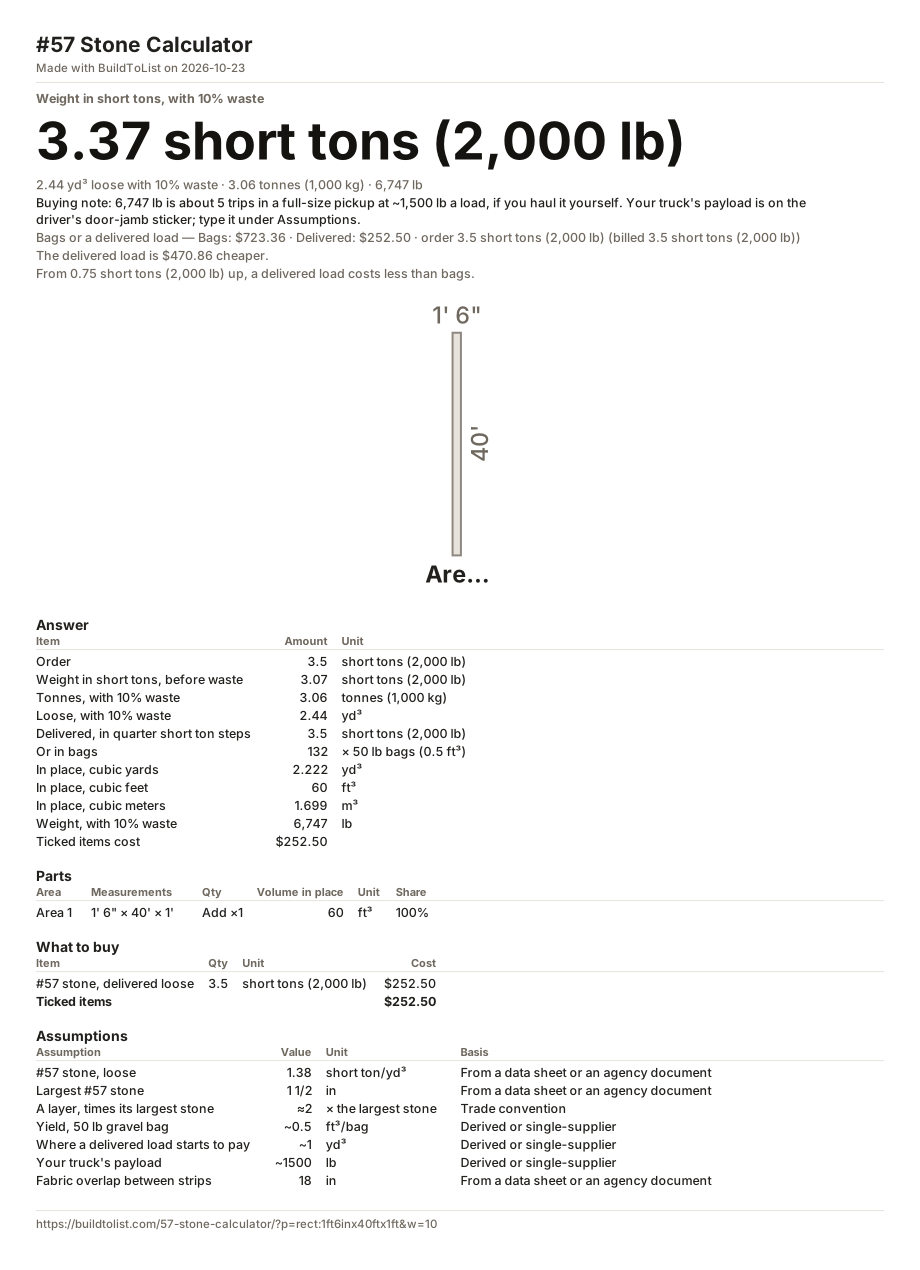
How much #57 stone you need
Length × width × depth gives the volume, the stone's weight turns it into short tons, and 10% for waste goes on once. A drainage trench 18 inches wide, 40 feet long and 12 inches deep is 1.5 × 40 × 1 = 60 cubic feet, or 2.22 cubic yards. #57 stone weighs about 1.38 short tons a yard, so the trench takes 3.07 short tons; with waste you order 3.37 short tons, which a quarry rounds up to 3½. A yard that sells by volume loads 2.44 cubic yards. In 0.5 cubic foot bags the same trench is 132 bags, which is why nobody fills a trench from bags.
#57 is a clean crushed stone, graded to about an inch, with the fines washed out. That is what it is bought for: the gaps between the stones carry water. It is also why this page asks nothing about compaction — a stone with no fines does not pack down the way crusher run does, so the depth you lay is the depth you get, and the waste covers what settles and what spills.
What a yard of #57 weighs
The Federal Highway Administration measured #57 stone at 95.4 to 108.7 lb a cubic foot; the middle of that, 102 lb, is 1.38 short tons a cubic yard, and that is the figure here. Missouri DOT's tables put loose #57 a little lower, at 1.21 to 1.30. Some producers quote an ordering factor as high as 1.65 short tons a yard — close to a compacted weight, so with 10% waste on top it buys about a fifth more stone than this page does. If your quarry gives you its own weight, type it under Assumptions and the short tons follow.
A short ton is 2,000 lb, which is what a US quarry means by its price "per ton". A tonne is 1,000 kg, about 10% heavier; the page prints both so the two are never mixed up.
How deep
- A drainage trench or French drain: as deep as the trench, with the pipe bedded in it. A 4 inch pipe takes about 3.5 cubic feet out of 40 feet of trench, less than the waste allowance, so most people simply fill around it.
- A base under a shed, a deck footing or a paver walk: 4 inches is common. A shed pad 12 by 16 feet at 4 inches is 3.60 short tons with waste, 2.61 loose yards, or 141 bags.
- Never thinner than twice the stone: the FHWA gravel roads guide asks for a layer at least twice as deep as its largest stone, so inch stone wants 2 inches or more.
Wrap a drainage trench in landscape fabric before the stone goes in, or the soil around it washes into the gaps and the drain silts up. The landscape fabric row on the list lays fabric under the stone only, as for a bed. To line the bottom and both sides of the trench above and fold over the top, the strip has to be about 5 feet wide: 1½ across the bottom, a foot up each side and 1½ to close over the stone.
Buying it
Quarries sell #57 by the short ton; landscape yards often by the cubic yard. Choose which in the form, and the order is rounded up to the step you pick, a quarter unless you say otherwise. Three and a half short tons is 7,000 lb, five trips in a full-size pickup at the 1,500 lb payload we assume, and one dump from a truck. Type the price per short ton or per yard and the delivery fee in the comparison under the shopping list to see the total. The delivered prices start at a dated reference estimate; they vary by region, so type your yard's. We are not connected with any quarry or producer.