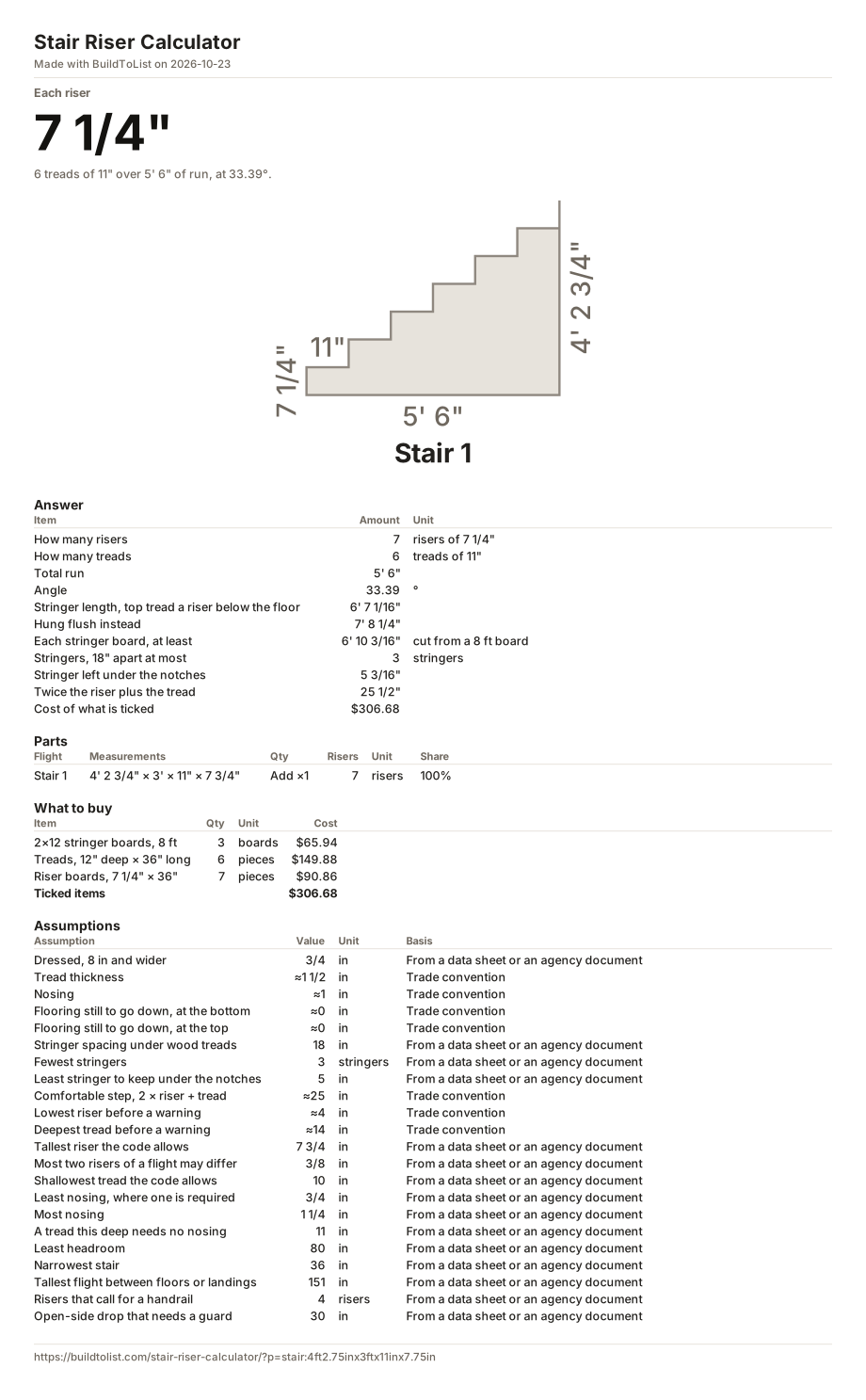
How tall each riser is
Divide the total rise by the tallest riser you will allow, round the count up, then divide the rise by that count. A deck or a porch 50¾ in high, under the IRC's 7¾ in limit: 50¾ ÷ 7¾ = 6.548, so 7 risers, and 50¾ ÷ 7 = 7¼ in each.
The run comes from the treads, not the risers: the top floor is the last step, so there are 6 treads, and at 11 in each the stair runs 66 in. A common mistake multiplies the 7 risers by the tread instead and gets 77 in, 11 in too long. The stringer is 6 ft 7 1/16 in along its notches.
Every riser the same height
The IRC lets the tallest riser of a flight be no more than ⅜ in taller than the shortest. Two things break that at the ends of a stair:
- The tread. Every tread lies on the stringer except at the floor, so the stringer's bottom riser is cut shorter by the tread's thickness: 7¼ − 1½ = 5¾ in. Cut it 7¼ in and the first step finishes at 8¾ in.
- Flooring still to go down. Tile at the foot makes the first step shorter, hardwood at the top makes the last one taller. Put both thicknesses under Assumptions and the page adds them to the rise and cuts the stringer for them.
When the code allows a taller riser
The model IRC allows 7¾ in. Of the five state adoptions of IRC 2021 we read, four allow more: Connecticut, Pennsylvania and Virginia 8¼ in, Utah 8 in, all with treads from 9 in. Type your town's figure over the code's under Assumptions and the check calls it your rule. A tread of 11 in or more needs no nosing; under 11 in the code asks for ¾ to 1¼ in.