How much rubber mulch for a play area
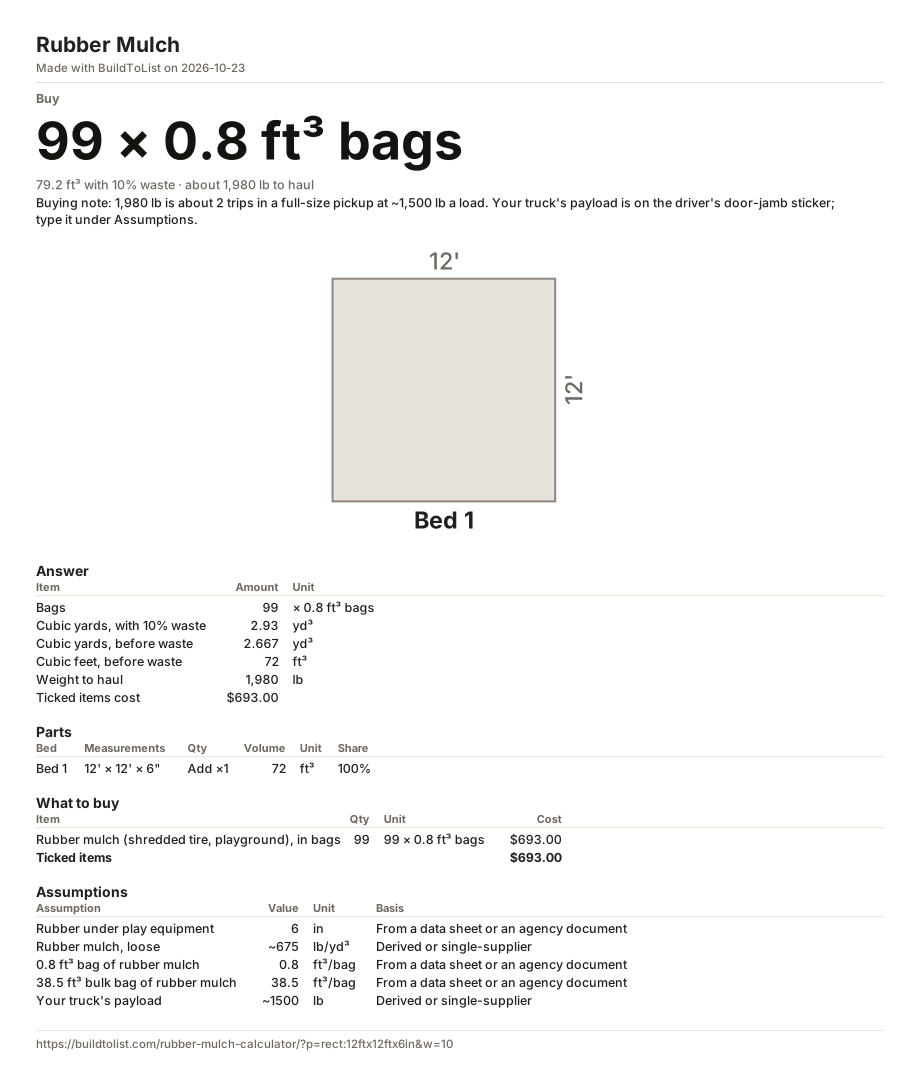
A 12 by 12 foot play area at 6 inches deep is 144 square feet × 0.5 feet = 72 cubic feet, which is 2.67 cubic yards. With 10% for spill and topping up, 79.2 cubic feet. In the 0.8 cubic foot bags a shelf stocks that is 99 bags; in the 38.5 cubic foot bulk bag the maker sells, 3. The same job 4 inches deep is 66 bags — and 4 inches is below what the CPSC asks for under equipment, so the page says so beside the depth box.
Rubber mulch weighs about 25 pounds a cubic foot, so those 79.2 cubic feet weigh 1,980 pounds. That is more than a half-ton pickup carries, which is why the page counts trips: two, at the 1,500 pound payload it starts from. Shredded rubber is heavier than bark by volume and far heavier than it looks in a bag.
Six inches, not two to four
Wood mulch goes on a bed 2 to 4 inches deep, because deeper than that keeps air from the roots. Rubber mulch under play equipment is a different question with a different answer: the CPSC's Public Playground Safety Handbook (Pub. 325, section 2.4.2.2) asks for at least 6 inches of shredded rubber, which protects a fall of 10 feet. The same clause asks 9 inches of other loose fill for that height, and says other loose fill packs down by a quarter or more underfoot. Whether rubber packs down less is not something the handbook says, so this page does not say it either: it gives you the 6 inches the clause asks for.
Measure the area the equipment needs, not the footprint of the equipment. A swing needs clear ground well in front of and behind it; a slide needs it at the bottom. Add parts for an L round a corner of the yard, or subtract a circle where a post goes.
If you would rather use bark, the same clause asks 9 inches of other loose fill for a 10 foot fall, not 6. The link to the bark page at the bottom carries this area across, but it does not carry that depth: type 9 inches there if the ground is under play equipment.
Play areas by size
At 6 inches, with 10% for spill:
| Area | Square feet | Cubic feet, with waste | 0.8 ft³ bags | 38.5 ft³ bulk bags |
|---|---|---|---|---|
| 8 × 8 ft | 64 ft² | 35.2 ft³ | 44 | 1 |
| 10 × 10 ft | 100 ft² | 55 ft³ | 69 | 2 |
| 12 × 12 ft | 144 ft² | 79.2 ft³ | 99 | 3 |
| 16 × 16 ft | 256 ft² | 140.8 ft³ | 176 | 4 |
| 20 × 20 ft | 400 ft² | 220 ft³ | 275 | 6 |
The bags add up fast because they are small: 0.8 cubic feet is about a quarter of the 3 cubic foot bag the wood mulch page counts in. One bulk bag holds what 48 of the small bags hold, which is why the page lists it on a row of its own rather than mixing the two sizes into one plan.
Both rows are there to pick between, and the cost you see is the cost of the row you tick. The bulk bag's row shows no cost at all, because nothing readable prices one — tick it and the total says "no price" until you type what your supplier quotes.
What this page does not know
The bulk bag has no price here. Nothing readable prices one, and a made-up figure would be worse than an empty box, so the box stays empty and says so — type what your supplier quotes and the list follows. The price on the small bag is an estimate too: listings for a 0.8 cubic foot bag ran $6 to $8 in 2026, and the page starts from the middle. Both are reference prices you can type over, and the assumptions block holds every figure the answer used.
Rubber mulch is not sold loose by the yard on this page. Bark and topsoil are, and for those the page compares bags against a delivered load; for rubber there is no load to compare, so there is no comparison. If your supplier does sell it loose, work in cubic yards: the answer above is 2.93 cubic yards after waste.
Depth under play equipment is a safety figure, and the number here covers a 10 foot fall. Measure the highest place a child can stand or sit — the top of a slide platform, the seat of a swing at its highest — and if it is higher than 10 feet, the handbook asks for more material than this page's 6 inches.