How many bags of polymeric sand
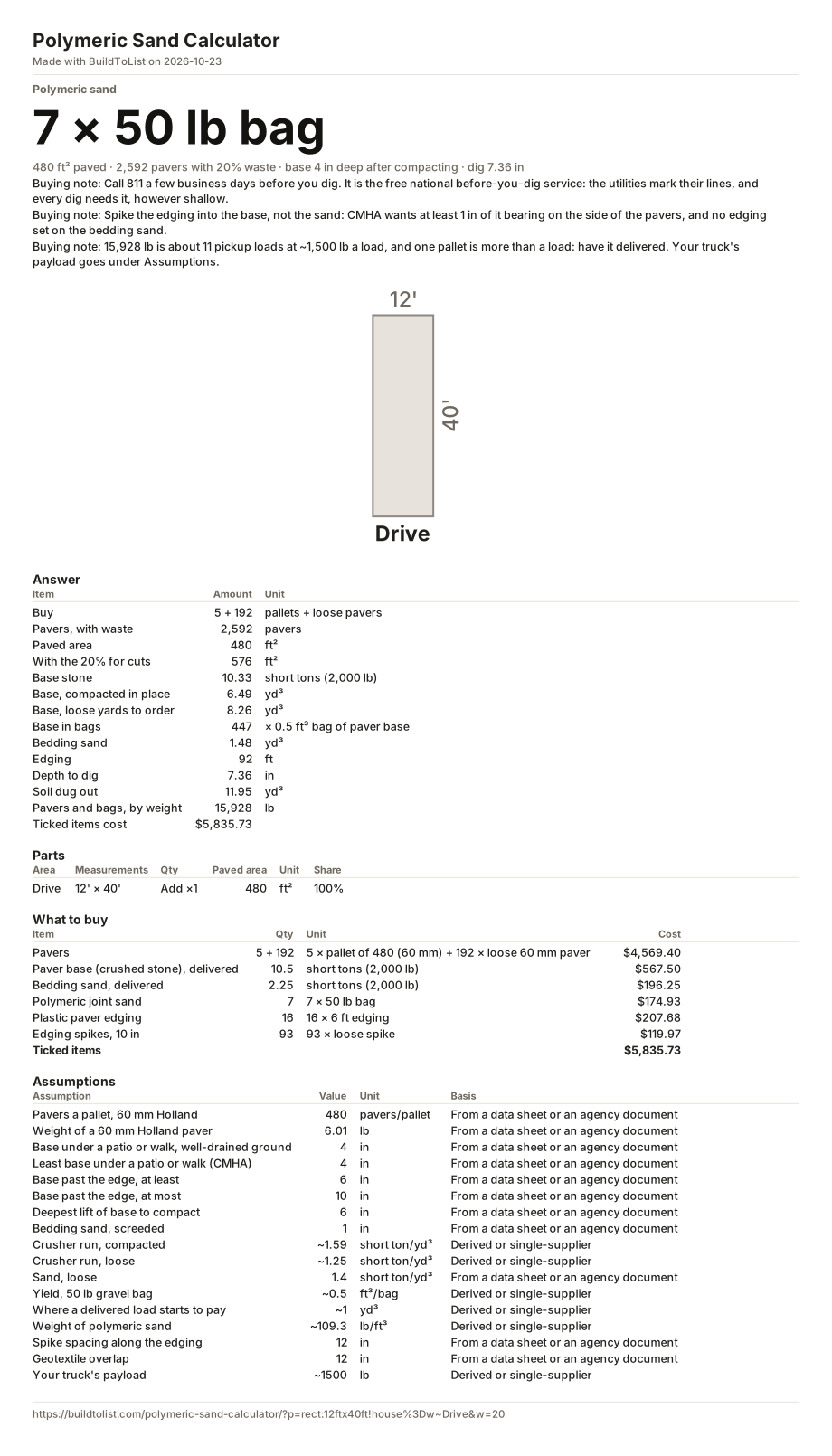
Work it out from the joint. A Holland paver is 100 by 200 mm, and it is laid at a 4 by 8 inch module; the difference, 3.12% of the surface, is joint, and the joint is as deep as the paver. For the 12 by 20 foot patio this page opens with, 240 square feet at 2.36 inches deep and 109.3 pounds a cubic foot, that is 161 pounds of sand: 4 bags of 50 lb, about 75 square feet a bag.
That sits inside the bag charts. Alliance Gator gives a 50 lb bag 65 to 85 square feet of 2 3/8 inch pavers with narrow joints, and Techniseal 60 to 120; a popular calculator prints "25 to 50 square feet a bag" for every paver, a range twice as wide that does not depend on the paver at all. The weight a cubic foot is Gator's own: its calculator holds a 50 lb bag as 0.01295 cubic meters.
The paver changes it
A thicker paver has a deeper joint, and a smaller one has more joint to the square foot. For the same patio:
| Paver | Joint sand | Bags of 50 lb |
|---|---|---|
| Holland, 60 mm | 161 lb | 4 |
| Holland, 80 mm | 215 lb | 5 |
| Holland, 45 mm | 123 lb | 3 |
Wide joints and spacer bars
Pavers with spacer bars on their sides hold the joint at what the maker designed, about an eighth of an inch; Gator says pavers with large spacer bars use 10 to 15% less sand than a joint worked out by width. Joints wider than about half an inch — tumbled pavers, natural stone — take far more sand and a wide-joint product: Gator's chart drops to 22 to 42 square feet a bag. Sweep the sand in dry, compact, top it up, and blow the surface clean before it is wetted. We are not connected with any maker named here.