Pavers for a driveway
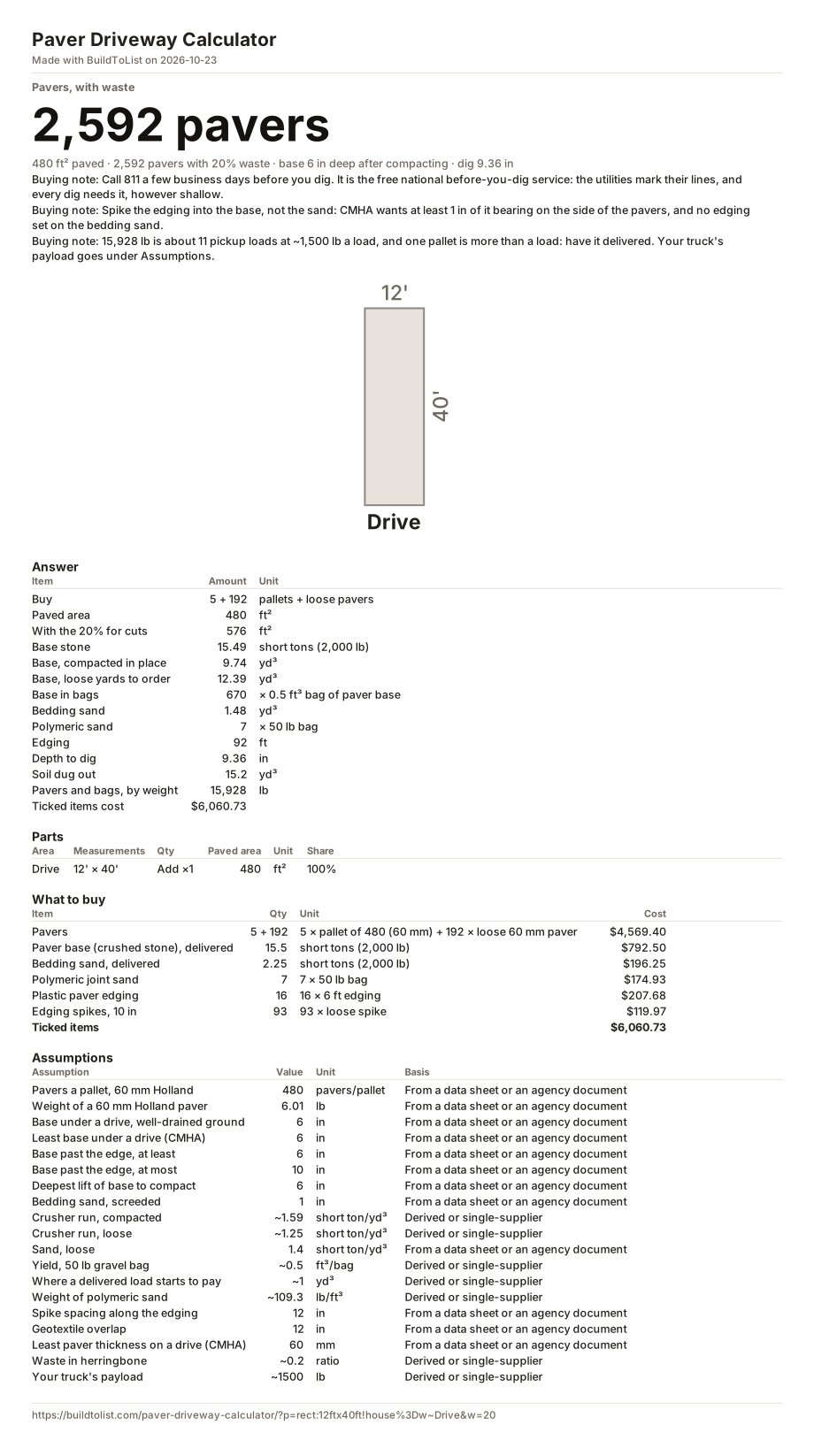
The drive this page opens with is 12 by 40 feet, its short end at the garage: 480 square feet. Laid in herringbone, with 20% for the cuts that pattern makes at every edge, that is 576 square feet, and at 4.5 Holland pavers to the square foot the drive takes 2,592 pavers — five pallets and 192 loose at the reference prices.
A deeper base than a patio
CMHA, the industry's technical body, puts the base under a residential drive at no less than 6 inches after compaction on well-drained ground, against 4 for a patio. On clay or freshly filled ground the page uses Unilock's 12 inches. At 6 inches, reaching 6 inches past the 92 feet of free edge, this drive takes 15.49 short tons (2,000 lb) of base, delivered, and the hole is 9.36 inches deep. Compact it in lifts of no more than 6 inches.
Which paver, which pattern
A 60 mm (2 3/8 inch) paver is what CMHA gives for driveways; 80 mm is for streets and anything heavier than a car. Pick the 45 mm Holland some stores sell and the page says it is too thin for a drive. ICPI's tolerance guide recommends herringbone for every surface that carries cars: the pavers lock against each other under a turning wheel, where a running bond can creep. That is why this page opens in herringbone, at the waste it costs.
The edge carries the load
A paver drive fails at its edge first. The edging has to bear on at least an inch of the paver's side and be spiked into the base, not the sand — the page counts a spike every foot. Mark the end against the garage, and any side against a walk or a slab, on the part's card: it needs no edging. Call 811 a few days before you dig. We are not connected with any maker or store named here.