Cubic feet to cubic yards
Divide by 27. A cubic yard is a box 3 feet each way, and 3 × 3 × 3 = 27, so
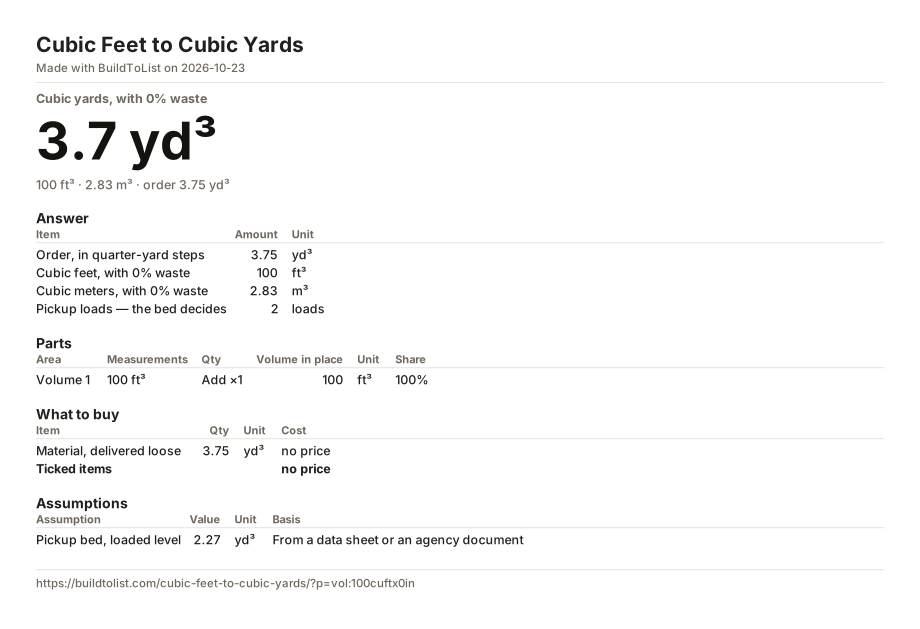
100 cubic feet is 100 ÷ 27 = 3.70 cubic yards, or 2.83 cubic meters.
The box above reads a plain number as cubic feet; type yd³ (or
just yd) after it for yards, or m³ for cubic meters,
and the line under the box
says how it read what you typed, in all three.
| Cubic feet | Cubic yards | Cubic meters |
|---|---|---|
| 27 | 1 | 0.76 |
| 54 | 2 | 1.53 |
| 100 | 3.70 | 2.83 |
| 135 | 5 | 3.82 |
A cubic yard is 0.764555 cubic meters exactly, because a yard is defined as 0.9144 meters. The page uses that figure, not a rounded one.
Cubic meters, and back
Going the other way, a cubic meter is 35.31 cubic feet, or 1.31 cubic
yards: type 1 m3 into the box and the line under it says so. A
quote from a supplier who sells by the cubic meter can be checked the same way
— 6 m3 is 7.85 cubic yards — and switching the page to metric
makes a plain number in the box mean cubic meters, and writes the link in
them.
Bags, and the yard they come to
Bags of mulch, soil and gravel are labeled in cubic feet. Twenty-seven bags of 2 cubic feet are 54 cubic feet: 2 cubic yards. Type the bag size, then the number of bags in the quantity box, and the page adds them up. Going the other way — how many bags of each size a yard takes, with the bag sizes stores actually sell — is the mulch and gravel pages' job.
Ordering, and what it covers
A yard that delivers loose material sells it by the cubic yard in steps, so the page rounds the order up: 3.70 cubic yards is an order of 3.75. Give the volume a depth to spread it to and the page says how far it goes: 100 cubic feet spread 3 inches deep covers 400 square feet.
Pick a material and the page weighs the volume too, in short tons of 2,000 lb and tonnes of 1,000 kg, and counts the pickup loads. The weights are estimates, and each is a box you can type your supplier's figure into. We are not connected with any calculator, supplier or store.